 Atlas
Atlas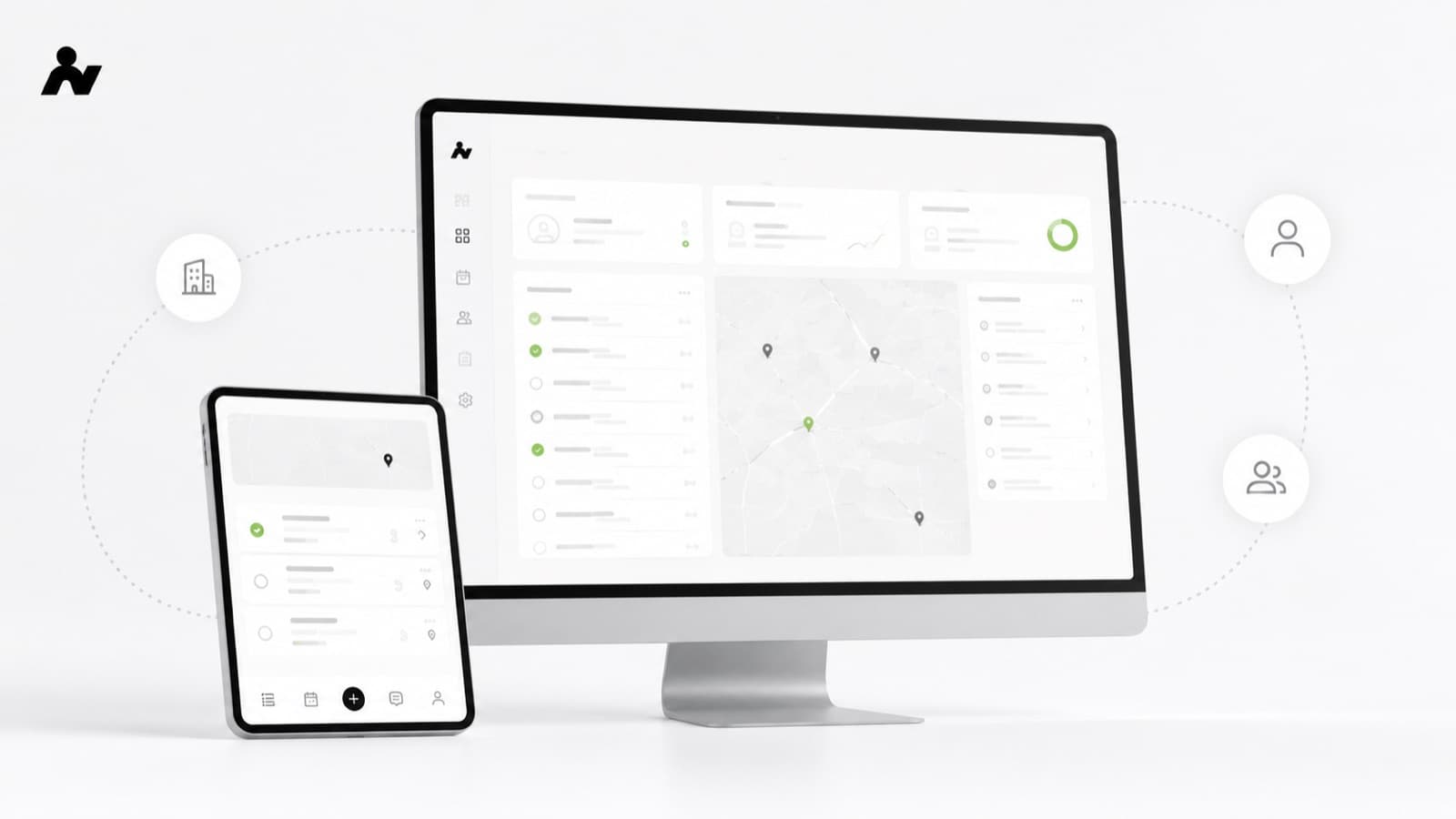
Two technicians and a shared calendar works. It works because one person, usually the owner, still holds the whole week in their head. They know which building was done Tuesday, which tenant was not home, and which manager is waiting for a callback. The calendar is a reminder, not a record.
At three technicians, that stops being true, and it stops quietly. Nothing crashes. Visits still happen. What changes is that the owner is no longer the only route between a job and the person doing it, and the calendar was never designed to be that route.
What breaks first, and it is not the schedule
The schedule is the visible part, so it gets blamed. The real first casualty is the record of what happened at an address.
A shared calendar stores a time and a title. It does not store which unit was treated, which pest was found, what the technician saw in the storage room, or whether the tenant was home. That information exists for about a day, in a text message, and then it is gone. With two people it survives in memory. With three it does not.
You notice six weeks later, when a property manager asks what was done in unit 302 in April, and the honest answer is that nobody knows.
The second thing: a missed visit with no reason attached
A technician arrives, nobody answers, and they move on. On a calendar, that entry stays exactly as it was: a block of time at an address, looking identical to a completed job.
This is the most expensive gap in the trade, and it is invisible. The unit was never treated. The infestation continues. The neighbouring units get it. Four weeks later you are back on the same floor doing three units instead of one, for free, because the contract says so.
The fix is not a better calendar. It is a system where a visit that did not happen cannot be closed without a reason, and where a visit with a reason goes back into the queue on its own.
The third thing: the morning phone call
With two technicians, dispatch is two phone calls. With three, it is three calls plus one callback because the second one changed. With five, the owner spends the first hour of every day on the phone instead of quoting work.
Owners tend to see this as a personal organisation problem. It is not. It is a structural one: the information about where someone should go lives in one person's head, and the only transmission channel is voice.
What actually has to replace it
Three things, and only three.
A day the whole company can see, where a job can move from one technician to another without a phone call. A history that belongs to the address, not to the technician, so it survives someone leaving. And a technician's own list, on their phone, showing today and nothing else.
Everything beyond that is negotiable. A pest control company running six technicians does not need a route optimizer before it needs a reliable answer to "what did we do in that building".
What Atlas does, and what it does not
Atlas holds those three things. The office schedules and reassigns by drag and drop. Each visit stays attached to a building and a unit, so the history follows the address rather than the person. The technician opens a link, sees the day, and checks work off on site. There is nothing to install, which matters more than it sounds: field software usually dies at the install step, not the feature list.
What Atlas does not do is worth saying plainly. No GPS tracking and no route optimization: it will not tell you the shortest drive between two buildings. No accounting: it issues invoices and their taxes, and stops there. It does not collect your customers' payments either; they pay your company directly. And there is no photo attachment on a visit.
Those are not omissions waiting to be filled. They are the edges of a tool that does one job.
When it is worth changing
Not at two technicians. A shared calendar and a good memory are genuinely cheaper, and anyone who tells an owner otherwise is selling something.
It becomes worth changing when the owner starts answering questions with "I think", when a property manager asks for a history you cannot produce, or when a missed visit turns into a free retreat for the second time in a quarter. Those three moments arrive within weeks of each other, usually somewhere around the third technician.
Atlas is 39.99 USD per month with one technician included, then 9.99 USD per additional technician. There is a 5-day trial, a card is required to start it, and nothing is charged during those days.